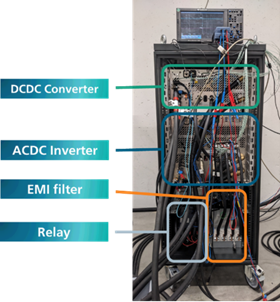
How do we prepare Europe’s energy systems for a surge in electric vehicles, renewable energy, and smarter grid technologies? That’s the challenge AGISTIN is tackling. As part of the project, researchers are running targeted lab tests to validate fast-charging infrastructure, prototype intelligent inverters, and characterize advanced battery modules. These experiments are more than technical—they’re foundational steps toward a more flexible, resilient, and sustainable energy future.
Testing the Future of Fast EV Charging
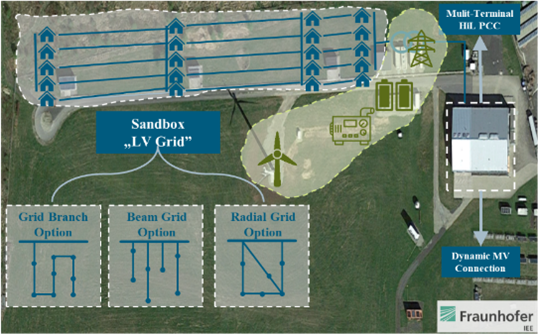
The AGISTIN project is advancing how electric vehicles (EVs) connect to the grid. At the Fraunhofer Sandbox (in Kassel, Germany), a lab-based replica of low-voltage networks, researchers test fast-charging technologies under realistic and reproducible conditions, including challenging worst-case scenarios.
This setup includes actual house connections, dynamic grid topologies, and a dynamic medium-voltage grid. It allows us to test how EVs can charge quickly without destabilizing the grid—a critical challenge as EV adoption accelerates.
Fast charging is essential for widespread EV use, but it can strain local grids. AGISTIN’s work helps ensure that future charging infrastructure is both powerful and grid-friendly.

Smarter Inverters for Smarter Grids
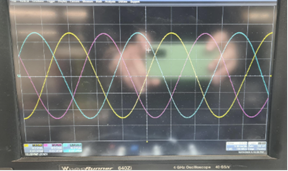
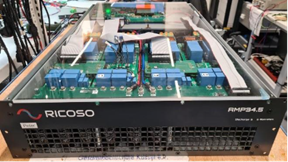
One of AGISTIN’s innovation is the implementation of advanced grid interface (AGI) models on prototype inverters. The developedRapid Inverter Control Prototyping Solution (RICOSO) can emulate a range of functions, such as following the grid and acting as a PV inverter or household load, or in island grid operation as a grid-forming battery inverter.
The new RICOSO generation features an improved control system that enables faster computing times (>20 kHz). So far, the AGI models from AGISTIN were successfully integrated into OPAL real-time systems and tested with RICOSO hardware.
These smart inverters are key to making decentralized energy systems work, especially in areas with weak or unstable grids. They help balance supply and demand locally, reducing the need for costly grid upgrades.
Batteries Built for the Grid of Tomorrow
AGISTIN is also advancing battery technology. Lab tests focused on Geyser Batteries’ aqueous battery technology, evaluating its electrical and thermal performance under dynamic operating conditions.
These tests support use cases like:
- Inertia provision via energy communities
- Frequency regulation services for grid stability
The outcome? Representative load profiles that help tailor battery modules to real-world applications.
As grids become more renewable and less predictable, batteries must do more than store energy, they must actively support grid operations. AGISTIN’s work helps design batteries that are ready for this role.